Description
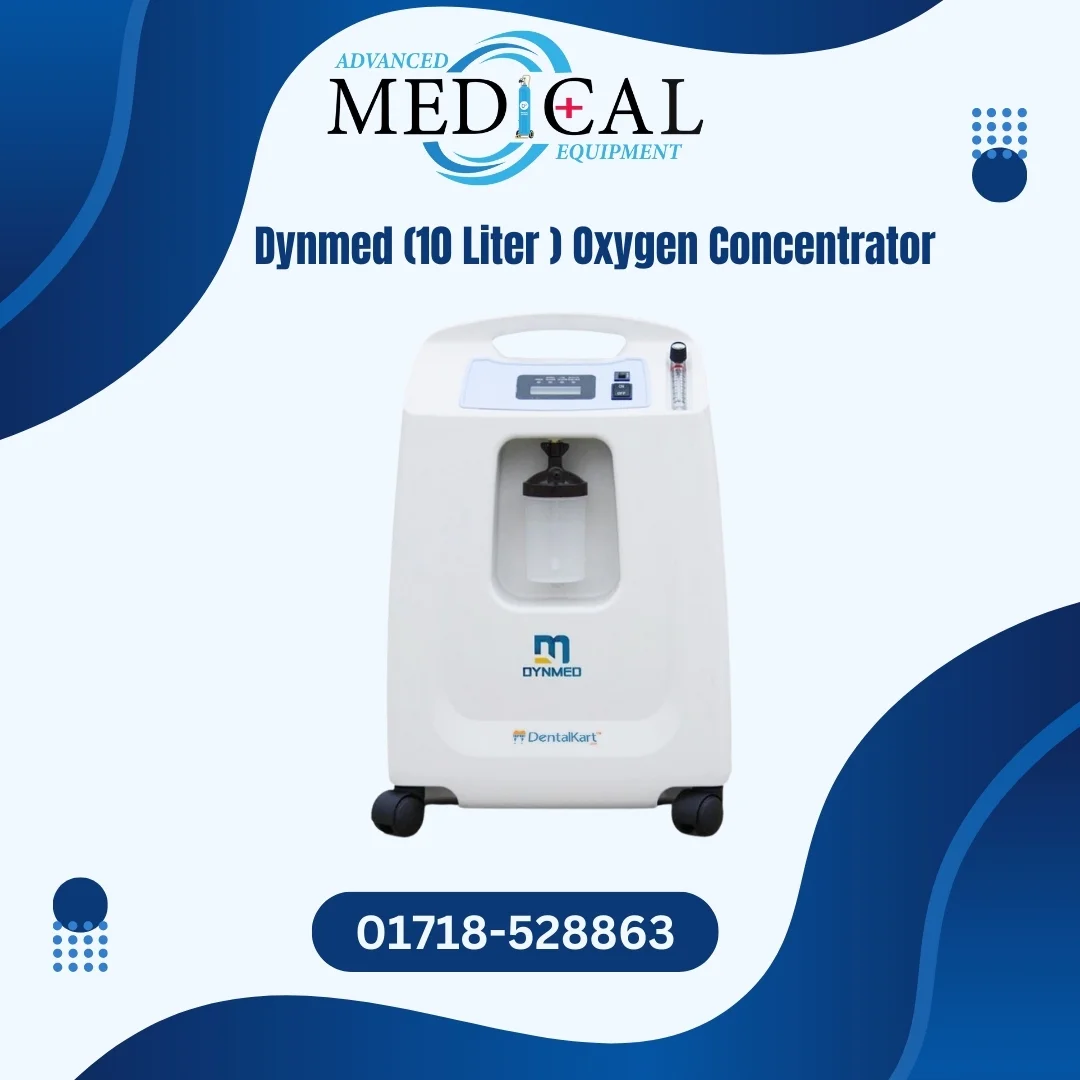
Dynmed 10 Liter Oxygen Concentrator – Dependable Oxygen Support for Home Care and Clinics
For people with chronic lung disease, long-term breathlessness or low blood oxygen levels, a steady supply of supplemental oxygen can make daily life safer and more comfortable. Oxygen cylinders have to be refilled, transported and handled carefully. An oxygen concentrator is different: it takes in room air, removes most of the nitrogen and delivers oxygen-enriched air continuously as long as it is plugged into electricity. The Dynmed 10 Liter Oxygen Concentrator from Advanced Medical Equipment is a stationary unit designed for home care, clinics and wards where higher flow rates are needed. With a maximum flow of up to 10 litres per minute, it gives your doctor more flexibility when prescribing oxygen therapy than a smaller 5-litre machine.
If you are comparing an oxygen concentrator price in Bangladesh, this Dynmed 10-litre model sits in the mid-market range, with the practical features most families and small facilities need: a flow meter, a humidifier bottle, wheels for easy movement and a straightforward control panel.
How an Oxygen Concentrator Works
Room air contains about 21 percent oxygen and 78 percent nitrogen. A concentrator draws air through filters, compresses it and passes it through beds of a special material called zeolite that holds back nitrogen. The result is a stream of air with a much higher oxygen content, which is delivered to the patient through tubing and a nasal cannula or mask. The process repeats continuously, so there is no need for refills as long as electricity is available. Concentrators in the 10-litre class typically deliver about 93 percent oxygen, with a tolerance of a few percent, at their rated flow, although purity can fall at the highest flow settings. Always check the specification label on your unit and the manufacturer's manual.
Features of the Dynmed 10L Oxygen Concentrator
- Continuous flow up to 10 LPM: suitable for patients who need higher flow rates than a 5-litre machine can offer, as directed by a doctor.
- Visible flow meter: the flow control tube on the top right lets you set and read the oxygen flow easily.
- Control panel with display: a panel at the top of the unit shows operating information and holds the power switch.
- Humidifier bottle: a recessed holder at the front keeps the humidifier bottle secure and visible. Humidification can make long-term oxygen use more comfortable for the nose and throat.
- Mobile design: four swivel wheels and a top handle let you roll the machine from room to room or lift it for short moves.
- Compact white housing: a clean, medical look that fits in a bedroom, ward or consulting room.
- Quiet, continuous operation: designed to run for long periods when used as directed. Check the manufacturer's data for the recommended duty cycle.
Who Might Use a 10-Litre Concentrator?
Oxygen therapy must always be prescribed and supervised by a doctor, who decides the flow rate, the hours of use and the delivery device. Common situations in which a 10-litre concentrator may be chosen include:
- Patients with chronic obstructive pulmonary disease (COPD), emphysema or chronic bronchitis whose doctor has prescribed long-term oxygen
- Patients with interstitial lung disease, pulmonary fibrosis or severe asthma who need supplemental oxygen at times
- Recovery from serious respiratory infections, including pneumonia or COVID-19, when the doctor advises home oxygen
- Patients with heart failure or other conditions causing low oxygen levels
- Small clinics, nursing homes and hospices that need an oxygen source without cylinder logistics
- Households that want a standby oxygen source as advised by their physician
Never start oxygen therapy on your own. Too much or too little oxygen can be harmful for some patients, and the cause of breathlessness must be diagnosed by a doctor.
Why Choose a Concentrator over Cylinders?
Continuous supply. A concentrator does not run out as long as there is power. Cylinders have limited capacity and need refilling.
Lower running cost. After the purchase, the main running cost is electricity and routine maintenance, rather than repeated cylinder refills.
Safer storage. There are no high-pressure cylinders to store at home. This removes the risk of cylinder damage and the handling challenges that come with them.
Convenience. It is simple to operate day and night, which suits patients who need oxygen overnight.
Consider a backup plan for power cuts, such as an IPS or UPS suited to the machine's power rating, or a backup cylinder, and talk to your doctor about what to do during load-shedding.
Setting Up and Using the Machine Safely
- Place the concentrator on a hard, flat surface in a well-ventilated room, with space around the air inlet and filters. Keep it away from walls, curtains and bedding.
- Fill the humidifier bottle with distilled or clean boiled and cooled water up to the marked level, and attach it to the outlet.
- Connect the oxygen tubing and nasal cannula or mask to the humidifier outlet.
- Plug the machine directly into a wall socket. Avoid using an extension cord unless the manufacturer permits it.
- Switch on the machine and allow it to warm up for the time stated in the manual.
- Set the flow to the rate prescribed by your doctor using the flow meter. Read the flow at the centre of the float ball.
- Place the cannula or mask on the patient and confirm that oxygen is flowing.
- Switch off the machine when not in use.
Oxygen Safety: Very Important
- No smoking and no flames. Oxygen makes fire burn faster and hotter. Do not smoke, light candles, use gas stoves or burn incense near the machine or the patient.
- Keep the machine at least a couple of metres away from heaters, stoves and sources of sparks.
- Do not use oil, grease or petroleum-based creams on or near the connectors and the patient's face. Use water-based moisturisers if needed.
- Do not block the air inlet or exhaust. Keep the concentrator away from dust and damp.
- Do not use the concentrator as a source of oxygen for ventilators, CPAP or high-flow nasal oxygen equipment unless the manufacturer states it is suitable. International procurement guidance notes that concentrators are generally not intended for that purpose.
- If the alarm sounds, the patient feels worse, or the machine stops, switch to a backup oxygen source and call your doctor or emergency services immediately.
Maintenance Checklist
Good maintenance keeps the concentrator reliable. Typical care for a machine in this class includes the following, but follow the manual for your unit.
- Weekly: wash the cabinet air filter or cabin filter with mild soap and water, dry it fully and refit it. Wipe the cabinet with a damp cloth.
- Daily: empty, wash and refill the humidifier bottle with fresh water. Replace the water rather than topping it up.
- Replace consumables: change tubing, nasal cannula or mask regularly, as recommended by the manufacturer or doctor.
- Annually or at set hours: have a trained technician check oxygen purity and flow with an analyser and replace internal filters where needed. Many manufacturers specify service intervals in running hours.
Buying Advice for Bangladesh
Oxygen concentrator prices in Bangladesh vary widely depending on brand, flow rating, purity, alarm features and warranty. Reports of 10-litre machines range from the lower end of the market to well over one lakh taka. Before you buy, ask about the warranty period, after-sales service, the availability of spare parts and filters, the electricity consumption and the noise level. Ask the seller to demonstrate that the machine delivers the stated flow, and, if possible, check purity with an oxygen analyser. Beware of machines with unclear origin or unrealistic prices. Advanced Medical Equipment can supply the unit with guidance on use and maintenance, and can help you plan for power backup.
Why Buy from Advanced Medical Equipment?
Advanced Medical Equipment supplies respiratory care devices, hospital furniture and home-care essentials to patients, clinics and hospitals in Bangladesh. In addition to oxygen concentrators, we offer CPAP and NIV masks, air mattresses, thermometers and consumables, so you can equip a complete home care room from a single supplier. Call 01718-528863 to discuss availability, delivery and installation guidance.
Frequently Asked Questions
Can I buy and use an oxygen concentrator without a prescription?
You can purchase one, but oxygen therapy should be used only with advice from a doctor, who will set the correct flow and duration.
Can it run all day and night?
Concentrators are designed for long periods of use, but check the manual for the recommended duty and allow for routine maintenance.
What happens during a power cut?
The machine will stop and sound an alarm. Keep a backup oxygen cylinder or a suitable UPS or IPS and discuss an emergency plan with your doctor.
Is it portable?
It has wheels and a handle for moving inside the home or clinic, but it needs mains power and is not a battery portable concentrator.
Where is service available?
Contact Advanced Medical Equipment on 01718-528863 for service and filter replacement support.
Order the Dynmed 10 Liter Oxygen Concentrator
If your doctor has recommended oxygen therapy, a dependable concentrator is a vital part of your care. Call 01718-528863 or add the Dynmed 10 Liter Oxygen Concentrator to your cart to place your order.