Description
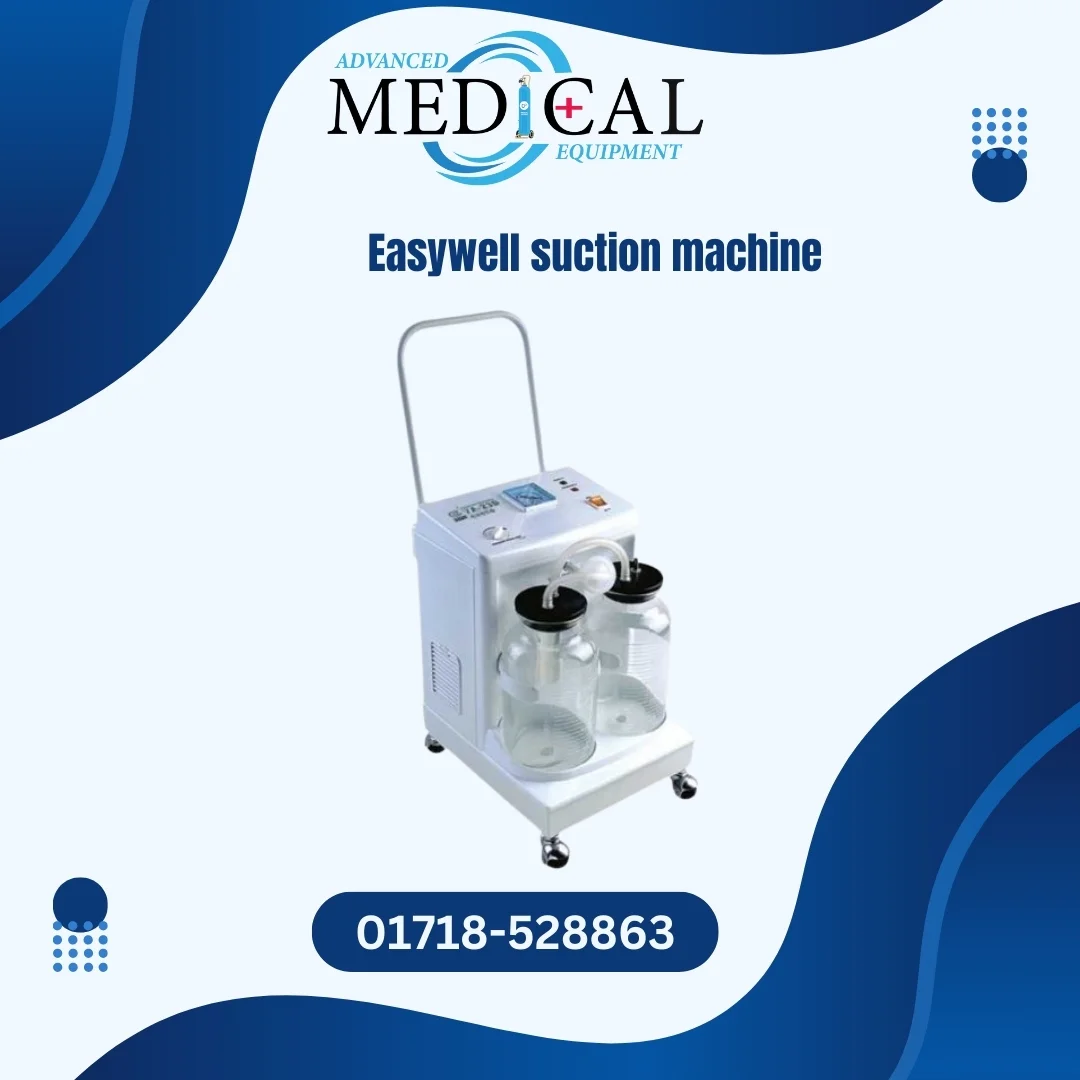
Easywell Electric Suction Machine with Two Collection Jars and Trolley Base
A dependable suction machine is one of the most important pieces of equipment in a hospital ward, operation theatre, emergency room, ICU, labour room or nursing home. When a patient cannot clear fluids from the mouth, throat or airway, or when fluids need to be removed during a procedure, caregivers need suction that is strong, steady and easy to control. The Easywell Suction Machine is a mobile, electrically powered, double-jar suction unit mounted on a wheeled base with a push handle. It is designed for facilities that need stronger and larger-volume suction than a small portable phlegm unit can provide.
This product is offered by Advanced Medical Equipment for hospitals, clinics, diagnostic centres, nursing homes and trained home-care users in Bangladesh. To confirm availability or ask about delivery and installation, call 01718-528863.
Overview of the Machine
The unit pictured in our listing has a white ABS-style cabinet that houses an oil-free pump, a front control panel with a round vacuum gauge, a regulator knob and a power switch, and a lower platform that carries two large transparent collection jars with black lids. Four swivel casters let the unit roll between beds and rooms, and a tall tubular handle at the back makes it easy for one person to push. The two-jar layout is a major advantage: one jar can be used for collection while the second jar acts as a reserve, or the two can be used together for higher volume.
Performance at a Glance
Electric suction machines in this double-jar class are commonly specified with a maximum negative pressure of about 0.09 MPa (around 680 mmHg), a free airflow of about 20 litres per minute and two reservoirs of 2,500 ml each. The vacuum level is adjustable, normally from a low setting of around 0.02 MPa up to the maximum, so the user can match the suction level to the patient and procedure. These are the headline numbers published for the widely used 7A-23B family of electric suction apparatus, which is the design category this unit belongs to. Please read the label on the machine you receive to confirm the exact rating.
- Strong vacuum that is adjustable with a regulator knob and read from a vacuum gauge
- Two large collection jars of about 2,500 ml each, graduated for measuring collected fluid
- Oil-free pump design that reduces the risk of oil contamination and lowers maintenance needs
- Overflow protection and an air filter to help keep fluid out of the pump
- Four-wheel base and push handle for quick movement around wards and theatres
- Mains-powered operation for continuous use in facilities with a stable electricity supply
Where This Suction Machine Is Used
Hospitals use mobile suction units in many places at once. In the emergency department, suction clears secretions, blood or vomit from the airway of an unconscious or trauma patient. In the operation theatre, suction removes fluids from the surgical field. In the ICU and high-dependency unit, it supports patients who are intubated or who have a tracheostomy and cannot clear their own secretions. In obstetrics and gynaecology, suction is part of routine delivery room equipment. In nursing homes and palliative care, it supports patients who have difficulty swallowing or coughing. Dental and ENT clinics also use suction for oral and nasal procedures.
Because this is a clinical suction device, it should be used by trained healthcare staff or by caregivers who have been properly instructed by a doctor or nurse. Incorrect suction pressure or technique can injure delicate tissue.
Advantages Over Small Portable Suction Units
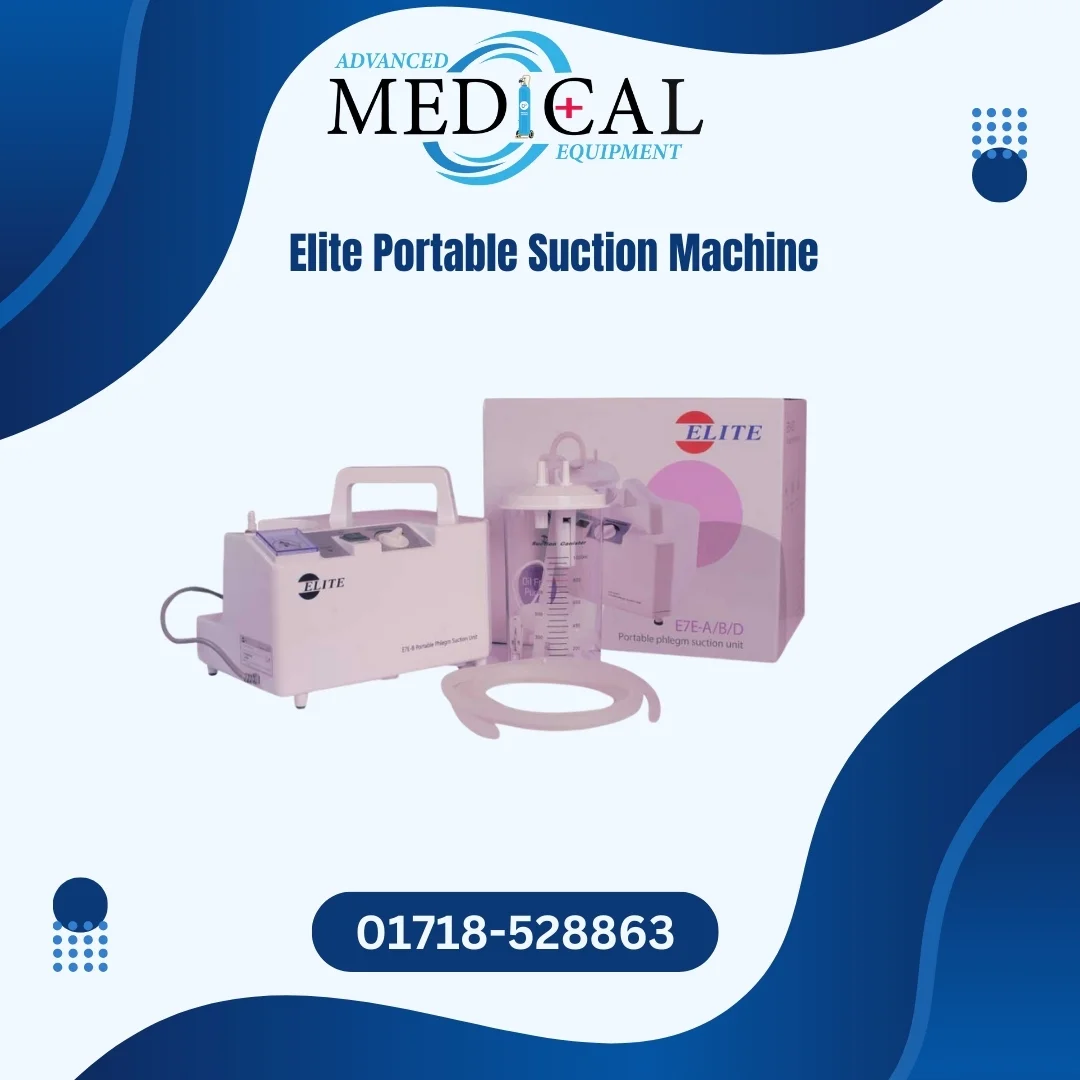
Small portable phlegm suction units are valuable for home care and emergency kits, but they typically carry a single jar of about one litre and a lower airflow. A trolley-mounted double-jar machine offers a larger working volume so staff do not need to stop and empty the jar in the middle of a procedure. It also offers a stronger maximum vacuum, which is needed for thick secretions and for surgical suction. The trolley frame keeps the jars at a stable height, the gauge is easy to read from standing position, and the two-jar design lets staff swap or empty one jar while the other remains available.
Setting Up and Operating the Machine
Place the unit on a level floor and lock the casters if the design allows. Check that the jars are clean, that the lids and silicone seals are fitted correctly and that the tubing is connected to the correct ports according to the manual: one port connects to the patient tube and another connects the jar to the pump. Plug the machine into a properly earthed socket. Before connecting to a patient, switch on the pump, block the patient tube briefly and adjust the regulator knob to the level the clinician has ordered. Watch the gauge to confirm that the set vacuum is reached. During use, observe the level in the jar and empty it before it reaches the overflow limit. Switch off the machine before disconnecting tubing at the end of the procedure.
Cleaning and Infection Control
Suction machines come in contact with body fluids, so cleaning discipline is essential. After use, discard collected fluid according to your hospital's waste policy, wearing gloves and eye protection. Wash the jars, lids and tubing with detergent and water, then disinfect according to your facility's protocol and the manufacturer's guidance. Dry all parts fully before reassembling. Replace disposable catheters, connectors and filters for every patient where required. Wipe the outer cabinet with a disinfectant cloth that is safe for plastic surfaces. Keep the pump air inlet clear and have the unit checked by a technician at regular intervals.
Safety Considerations
Never run the machine with a blocked overflow valve or a missing filter. Do not use suction levels higher than those ordered by the clinician. Keep the machine away from flammable anaesthetic gases unless it is specifically rated for that environment. Use only the correct mains voltage, which in Bangladesh is typically 220 V at 50 Hz. If you notice unusual noise, burning smell, smoke or fluid inside the pump housing, stop using the machine immediately and call a qualified biomedical technician.
Buying Guide: Suction Machines in Bangladesh
Suction machine prices in Bangladesh depend on pump type, vacuum strength, jar capacity and brand. Small portable units are commonly available from about BDT 6,500 to BDT 9,000, while double-jar electric trolley units in the 7A-23B and 7A-23D family are commonly listed between roughly BDT 13,800 and BDT 22,000, and surgical-grade diaphragm units cost more. The Easywell double-jar suction machine sits in the mid-range of the clinical trolley class. When you compare options, ask about the pump type, maximum vacuum, jar capacity, noise level, spare parts such as jars, filters and silicone tubes, and whether the seller can arrange service. A machine that is cheap but has no spare parts becomes expensive quickly.
Why Buy from Advanced Medical Equipment?
We help hospitals, clinics and families select equipment that fits their real needs instead of simply selling the most expensive item. Our team can explain the difference between portable and trolley suction, confirm accessories and arrange delivery. Call 01718-528863 for quotations, bulk orders and project supply.
Frequently Asked Questions
Can this machine be used at home? It can, if a doctor or nurse has trained the caregiver, there is a stable power supply and there is room for a trolley-sized unit. For home care a smaller portable suction unit is often more practical.
How often should I empty the jars? Empty a jar before it reaches the overflow level and after every patient or procedure.
Does it need oil? Models of this type use an oil-free pump, so no oil changes are needed.
What spare parts should I keep? Keep spare silicone tubes, filters, jar lids and seals so that the machine is not out of service when a part wears out.