
Description
FPD X-Ray Detector (Flat Panel Detector) for Digital Radiography in Bangladesh
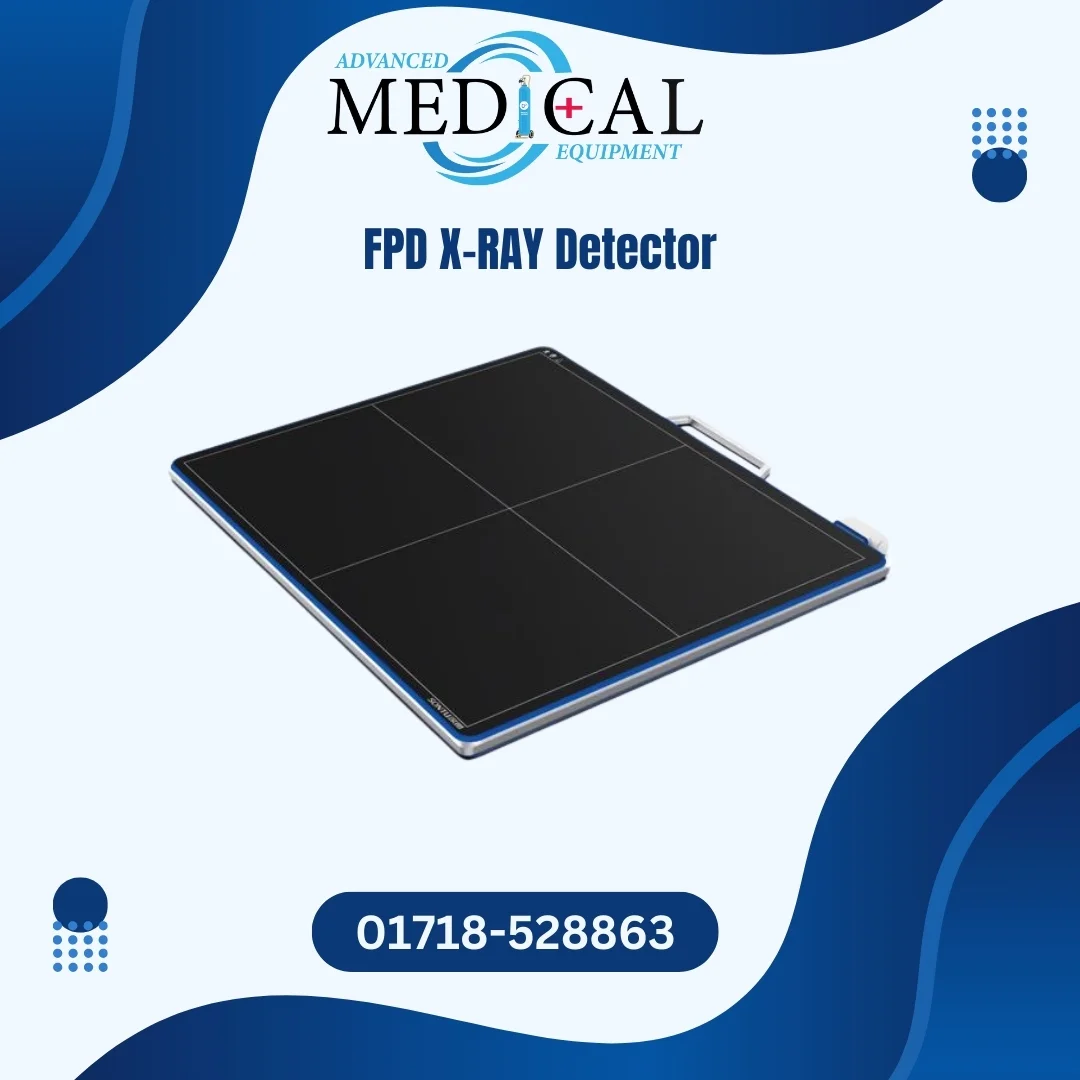
Digital radiography has transformed medical imaging. Instead of exposing film, developing it in chemicals and waiting for the result, a flat panel detector captures the X-ray image electronically and sends it to a computer in a few seconds. Radiographers can check positioning immediately, adjust brightness and contrast on screen, store images digitally and share them with doctors, even in other cities. The FPD X-Ray Detector offered by Advanced Medical Equipment is a slim, rigid, cassette-style flat panel with a black imaging surface, a blue-trimmed aluminium frame and a side handle, as shown in the product photo. It is intended for hospitals, diagnostic centres and clinics that are upgrading from film or computed radiography to direct digital radiography.
Because this is professional radiology equipment, the exact panel size, interface and software should be confirmed with our team before ordering. Call 01718-528863 for technical discussion and quotations.
What Is a Flat Panel Detector?
A flat panel detector, abbreviated FPD, is the image receptor in a digital radiography (DR) system. It sits where the X-ray film or computed radiography cassette would normally be placed behind the patient. When X-rays pass through the body, the detector converts the radiation into an electrical signal for each of millions of tiny picture elements, called pixels. A processor then turns these signals into a digital image. Most general-purpose panels use an amorphous silicon thin-film transistor array combined with a scintillator layer. Panels with a caesium iodide (CsI) scintillator are widely valued for good image quality at relatively low dose, while gadolinium oxysulfide (GOS) panels are often chosen where cost is a priority.
Key Features of the Product
The panel shown in the photo has a large, flat active area divided visually into four quadrants by thin lines, which mark the imaging area. A metal handle is mounted on the edge for carrying, and a connector or latch is visible at the side. The frame is slim and light enough to be handled by one radiographer, which is a major advantage over fixed detectors.
- Thin cassette-style design that fits standard bucky trays and many existing X-ray tables and wall stands in retrofit installations
- Digital image available within seconds so repeat exposures can be reduced
- Edge handle and rugged frame for safer handling
- Large active area suitable for chest, abdomen, spine and limb studies
- High dynamic range typical of modern a-Si digital panels
- Compatible with DR software that supports image processing, annotation, storage and DICOM export (software is not part of the detector hardware unless supplied)
Typical Technical Characteristics of This Class
General-purpose flat panel detectors of the 14 by 17 inch and 17 by 17 inch cassette sizes typically use an amorphous silicon sensor with a caesium iodide scintillator, a pixel pitch of about 139 to 140 micrometres, a 16-bit analogue-to-digital conversion and a thickness of around 15 mm. Weight is usually in the range of about 3 to 4 kg, depending on the size and battery. A 17 by 17 inch panel has an image area of about 43 by 43 cm, and a 14 by 17 inch panel has an active area of about 36 by 43 cm. Connectivity can be wired through gigabit Ethernet or wireless through a Wi-Fi standard such as 802.11ac, with some models offering battery lives of many hours. These figures are drawn from published information on comparable panels listed in Bangladesh and by international suppliers. Exact values for the panel you receive should be taken from its datasheet and label.
Benefits for Hospitals and Diagnostic Centres
Switching from film or CR to a flat panel detector brings clear workflow benefits. Patients spend less time in the radiology room, because positioning errors can be seen immediately and corrected. Film, chemicals and darkroom space are no longer needed, which reduces recurring costs and environmental waste. Images are stored electronically, which makes archiving and retrieval straightforward and supports teleradiology. Dose-saving image processing can help maintain image quality at appropriate exposure levels, and the high sensitivity of CsI panels can support lower-dose protocols where clinically suitable. For busy centres, these factors can increase daily patient throughput.
Typical Applications
General radiography is the main application: chest X-rays, spine, pelvis, abdomen, extremities and skull. The panel can also be used in orthopaedic practices, emergency departments, trauma units, bedside imaging with mobile X-ray units and veterinary radiography, provided the system is configured correctly. A flat panel detector works together with an X-ray generator, a tube, a collimator and acquisition software, so it is important to ensure that all components are compatible.
Integration and Installation Considerations
A detector alone does not make a complete DR system. You will need a compatible X-ray generator with the right synchronisation method, either through a cable connection or through automatic exposure detection, a workstation computer with acquisition and viewing software, a network or storage solution and, if required, a PACS. Installation should be carried out by a qualified service engineer, and the room should be designed and shielded according to radiation protection standards. In Bangladesh, the use of X-ray equipment is subject to national radiation safety regulation, and facilities should comply with the licensing requirements of the Bangladesh Atomic Energy Regulatory Authority. Operators should be trained radiographers who follow the ALARA principle, which keeps radiation dose as low as reasonably achievable.
Handling and Care
Flat panel detectors are precision devices. Do not drop them or place heavy objects on them, and avoid bending or twisting the panel. Use a protective cover or pad when positioning patients with sharp objects or when imaging in the field. Wipe the surface with a soft cloth lightly dampened with a disinfectant approved by the manufacturer, and never allow liquids to enter the connectors. Charge and store batteries as directed, and keep the detector in a temperature-controlled, dry environment. Perform regular calibration and image quality checks as recommended by the manufacturer. Keep the software and drivers up to date.
Price and Buying Advice for Bangladesh
Prices for flat panel detectors in Bangladesh vary with size, scintillator type, connectivity and brand. Local listings of wired and wireless detectors range from approximately BDT 800,000 to BDT 1,450,000. Higher-end wireless models from established global brands cost more. When comparing offers, ask about the scintillator (CsI or GOS), panel size, pixel pitch, wired and wireless capability, battery life, software included, compatibility with your generator, installation, training, warranty length and what happens if the panel fails. Compare complete system quotations, not only the panel price, and ask for references from other users in Bangladesh.
Why Buy from Advanced Medical Equipment?
Advanced Medical Equipment can discuss your imaging needs, advise on compatible components and arrange delivery. We recommend that you share details of your existing X-ray unit so that we can confirm compatibility. Call 01718-528863.
Frequently Asked Questions
Is this a wireless detector? Many flat panel detectors of this style support both wired and wireless operation. Please confirm the exact connectivity with us.
Can I use it with my existing analog X-ray machine? Often yes, using a retrofit approach with a suitable generator interface or auto-detection, but compatibility must be checked.
What size is the panel? Common sizes are 14 by 17 inch and 17 by 17 inch. Confirm the size on the unit you buy.
Do I need software? Yes. A DR acquisition and viewing application is needed to operate the detector and process images.