
Description
Stainless Steel Kidney Dish (Emesis Basin) in 6, 8, 10 and 12 Inch Sizes
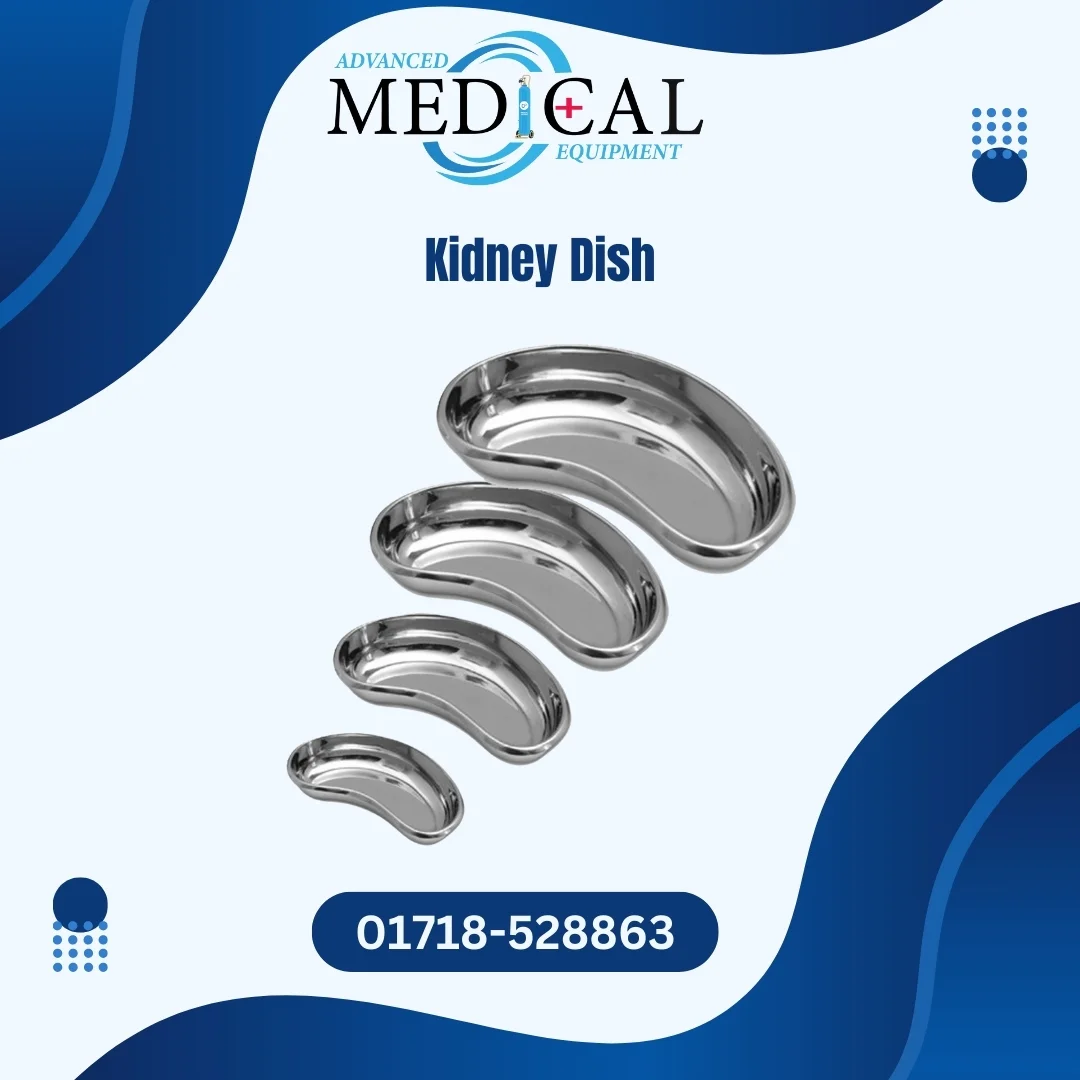
The kidney dish, also called a kidney tray or emesis basin, is one of the most familiar items in any hospital, clinic or first-aid room. Its curved, bean-like shape is designed to sit snugly against the body, which makes it ideal for catching fluids, holding used dressings and carrying small instruments to the bedside. The Kidney Dish from Advanced Medical Equipment is made of polished stainless steel and is available in four nested sizes, so you can choose the capacity that fits your procedure, from a small dish for swabs to a large basin for surgical trays.
What Is a Kidney Dish Used For?
The shape of the dish is no accident. One edge curves inward so the dish rests against the patient's neck, chin or side, and the opposite edge is deeper to hold liquid. Because of this design, the kidney dish serves many roles in daily care.
- Emesis basin: Patients who feel nauseous can hold the dish close to the face. Its depth and curve reduce spills.
- Dressing and wound care: Nurses place used swabs, gauze and cotton in the dish during dressing changes.
- Instrument tray: Small instruments such as forceps, scissors and needle holders can be set in the dish and carried to the bedside.
- Dental procedures: Dentists use kidney dishes to hold cotton rolls, small tools and rinse liquids.
- Injection and IV preparation: Syringes, ampoules and cannulas are placed in the dish for neat and quick preparation.
- Laboratory use: Technicians use dishes to hold samples, slides and small items for analysis.
- Surgery and minor operations: Surgical staff use larger dishes for instruments, specimens and irrigation fluids.
- Home care and first aid: Families caring for sick children or elderly relatives keep one on hand for nausea and dressing care.
Available Sizes and Approximate Capacity
Kidney dishes are produced in standard sizes across the industry. The approximate capacities below are reference values published for typical stainless steel dishes of these lengths. Actual capacity can vary slightly with depth and manufacturer, so treat them as a guide.
- 6 inch: roughly 150 to 200 ml. Best for swabs, cotton, small ampoules and light dressing work.
- 8 inch: roughly 400 to 450 ml. A good all-round size for wards, injection trays and nausea care.
- 10 inch: roughly 550 to 600 ml. Suited to larger dressings, instruments and clinic use.
- 12 inch: roughly 950 to 1,000 ml. The largest size, useful for surgical instruments, drainage and bigger volumes.
The sizes nest neatly into each other, so a full set takes little storage space on a trolley or shelf.
Features and Benefits
Stainless steel material. Stainless steel is the standard choice for medical hollowware because it does not rust easily, is strong, and can be cleaned and sterilised repeatedly. It does not absorb odours or stains, and it does not crack like plastic.
Smooth polished surface. A polished interior and rolled rim make the dish easy to wash and gentler on gloves and hands. There are few crevices where residue can hide.
Curved ergonomic shape. The kidney profile fits the contour of the body and lets the dish be held comfortably against the patient.
Reusable and economical. Unlike disposable pulp or plastic dishes, a steel kidney dish lasts for years when looked after, which lowers the cost per use and reduces waste.
Sterilisable. Stainless steel dishes are normally suitable for cleaning, disinfection and autoclaving according to the manufacturer's instructions and your hospital's protocol.
Multiple sizes. You can buy one size for a specific job, or a graded set to cover every procedure in your clinic.
Who Uses Kidney Dishes?
Hospitals and nursing homes need many dishes across wards, operating rooms, emergency departments and recovery areas.
Doctor chambers and clinics use them for dressings, injections and minor procedures.
Dental practices rely on small and medium dishes for chairside work.
Nursing students and training institutes need a set for practical classes.
Laboratories and diagnostic centres use dishes to carry samples and hold reagents safely.
Families and home-care nurses use them for bedside nursing care.
How to Clean and Sterilise
After each use, rinse the dish under running water to remove fluids and debris. Wash with warm water and a mild detergent using a soft brush or cloth. Rinse thoroughly and dry with a clean towel. For disinfection, soak in a hospital-approved disinfectant at the recommended concentration and time. For sterilisation, stainless steel dishes can usually be autoclaved or boiled in a suitable sterilizer; follow your facility's infection-control guideline. Avoid long contact with strong chlorine bleach, as it can pit and stain steel. Do not use steel wool or harsh abrasives, because scratches can trap dirt. Store the dish dry, ideally nested with paper between pieces to prevent scratching.
Tips for Choosing the Right Dish
- For nausea care at home, an 8 or 10 inch dish is easier to hold and catches more.
- For injection trays and dressing trolleys, 6 and 8 inch dishes are the most useful.
- For operating rooms and larger procedures, 10 and 12 inch dishes hold instruments and fluids comfortably.
- For training institutes, buy a nested set so students see every size.
- Check that the rim is smooth and rolled and that the base sits steady on a flat surface.
Why Stainless Steel Beats Disposable Dishes
Disposable kidney dishes made of paper pulp or plastic are convenient for single use, but they add to cost and waste in a busy clinic, and they can soften when wet. A stainless steel dish handles liquids, instruments and repeated sterilisation without deforming. For facilities that process many patients each day, reusable steel dishes are usually the more economical and more environmentally responsible choice, provided that cleaning and sterilisation routines are followed correctly.
Frequently Asked Questions
Is the kidney dish autoclavable? Stainless steel dishes are normally suitable for autoclaving. Follow your facility protocol and the supplier's guidance.
Which size should I buy for a clinic? Many clinics keep two 8 inch and two 10 inch dishes as a starting set. Add 6 and 12 inch dishes as your needs grow.
Can I buy a full set of four sizes? Yes. Select each size as a variation, or contact us for a set price.
Is it safe for food contact? Kidney dishes are medical hollowware and are intended for clinical use. Do not use them for serving food.
Do you supply wholesale? We supply hospitals, training institutes and resellers. Call for bulk rates.
Order from Advanced Medical Equipment
Advanced Medical Equipment supplies stainless steel hollowware, trays, bowls, sterilizers and clinic essentials across Bangladesh. Choose your size above or call 01718-528863 to ask about stock, bulk orders and delivery. A good kidney dish is a simple item that gets used every single day, so choose quality steel that will last.