Description
Easy Compressor Nebulizer Machine for Home and Clinic Use in Bangladesh
Respiratory problems such as asthma, bronchitis, chronic cough and seasonal allergies are among the most common reasons families in Bangladesh visit a doctor. Dust, traffic fumes, brick-kiln smoke, humidity and sudden weather changes make breathing difficult for children and older adults throughout the year. The Easy Compressor Nebulizer Machine is a practical, easy-to-operate respiratory therapy device that turns liquid medication prescribed by your doctor into a fine mist, so that the medicine can be breathed in directly through a mask or mouthpiece. It is compact enough for a bedside table, simple enough for a first-time user and robust enough for daily use in a clinic, pharmacy counter, nursing station or home-care setting.
This listing is supplied by Advanced Medical Equipment, a Bangladesh-based medical equipment supplier. If you want to check stock, delivery to your district or the contents of the box before ordering, you can call 01718-528863.
What Is a Compressor Nebulizer and How Does It Work?
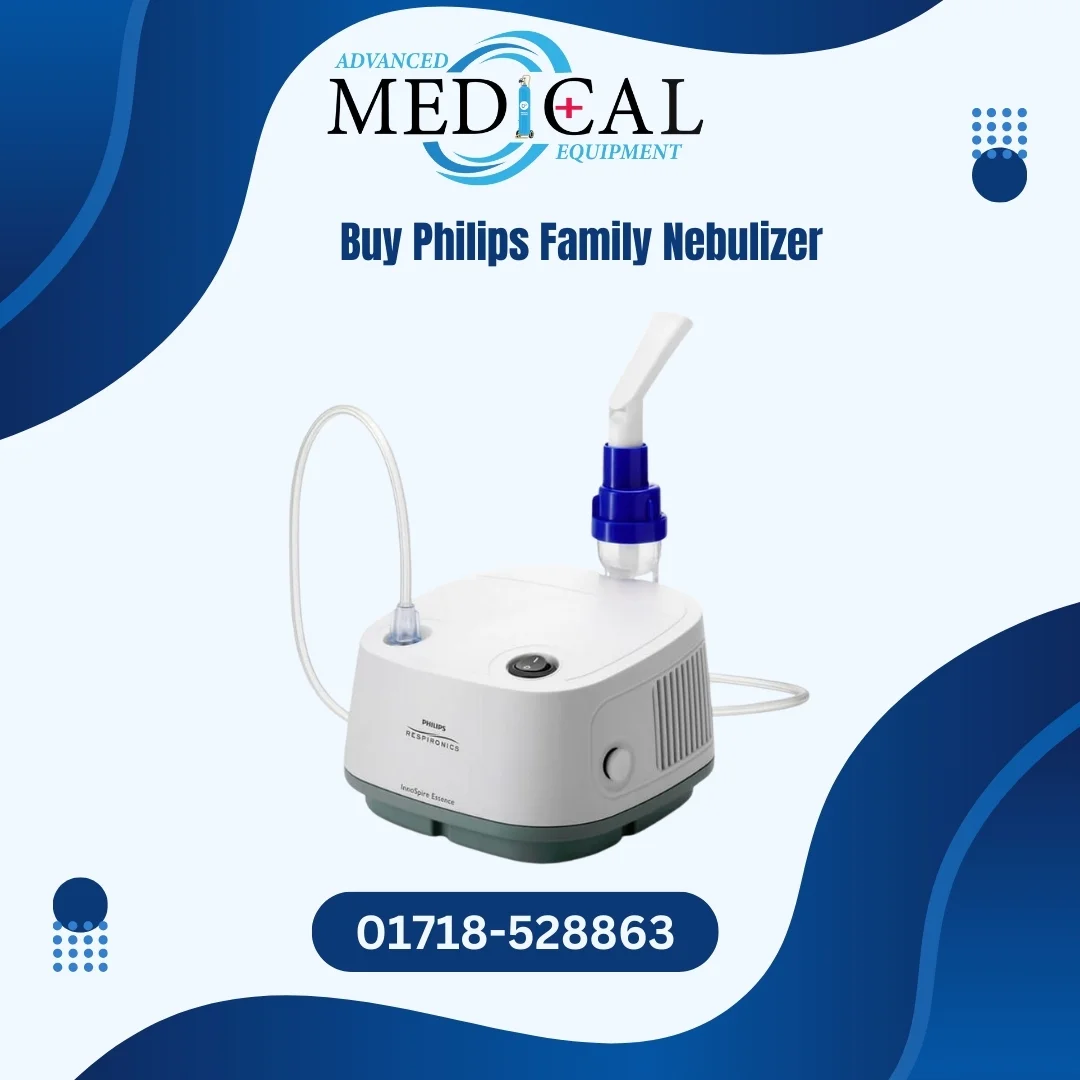
A compressor nebulizer has two main parts: an air compressor inside the white housing and a small medication cup (the nebulizer chamber) connected by a flexible air tube. When you switch the unit on, the compressor pushes a stream of air through the tube into the cup. As that air passes through a narrow nozzle, it breaks the liquid medicine into tiny droplets. These droplets form an aerosol cloud that you inhale with normal, relaxed breaths through the attached mask or mouthpiece.
The reason doctors prescribe nebulization is that the droplets are small enough to travel deep into the airways. Compressor nebulizers generally produce particles in the range of roughly 0.5 to 5 microns, which is the size range commonly associated with delivery to the lower respiratory tract. Because the patient only needs to breathe normally, nebulization is especially useful for infants, small children, elderly people and anyone who finds it difficult to coordinate breathing with a hand-held inhaler or spacer.
Design Features You Can See in the Product Photo
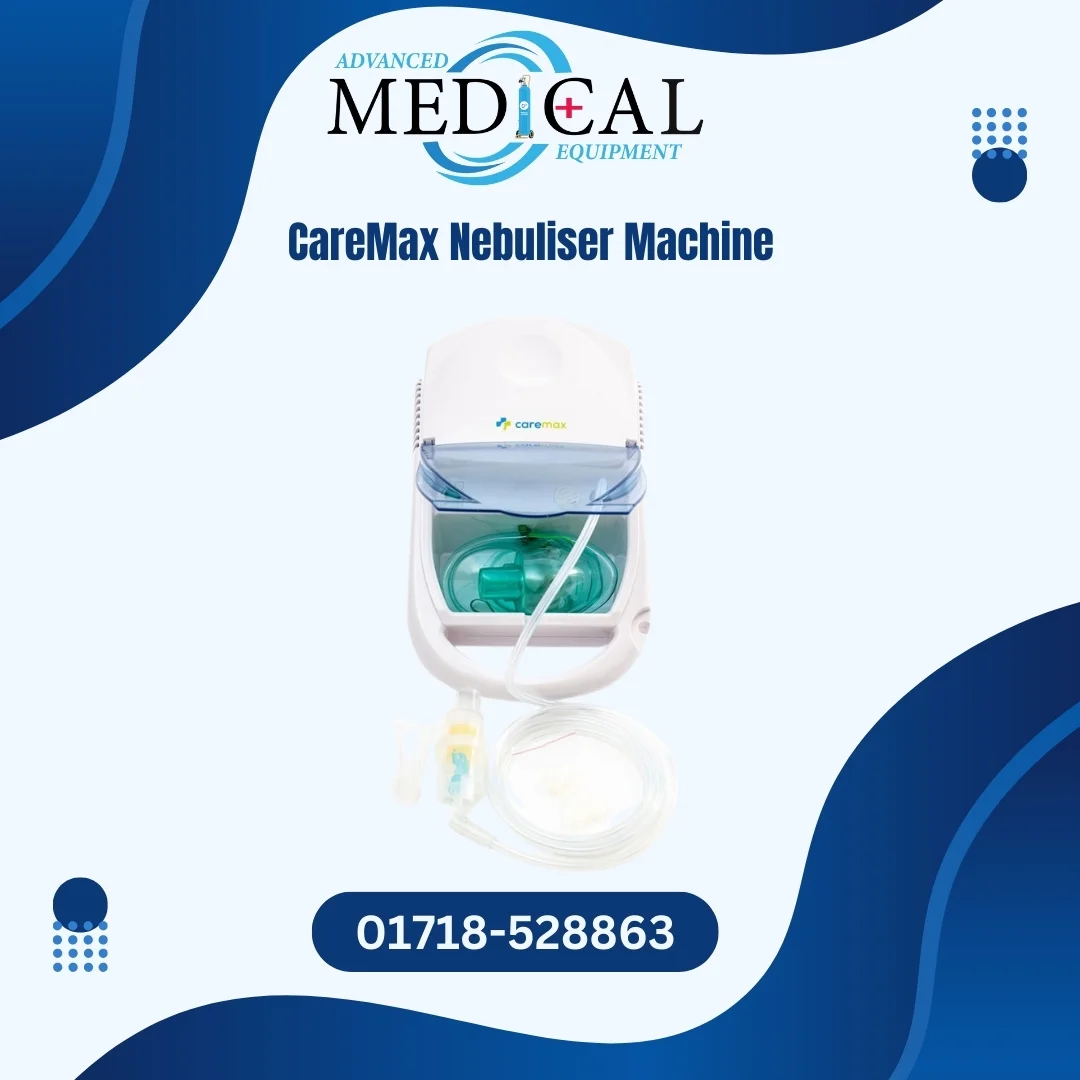
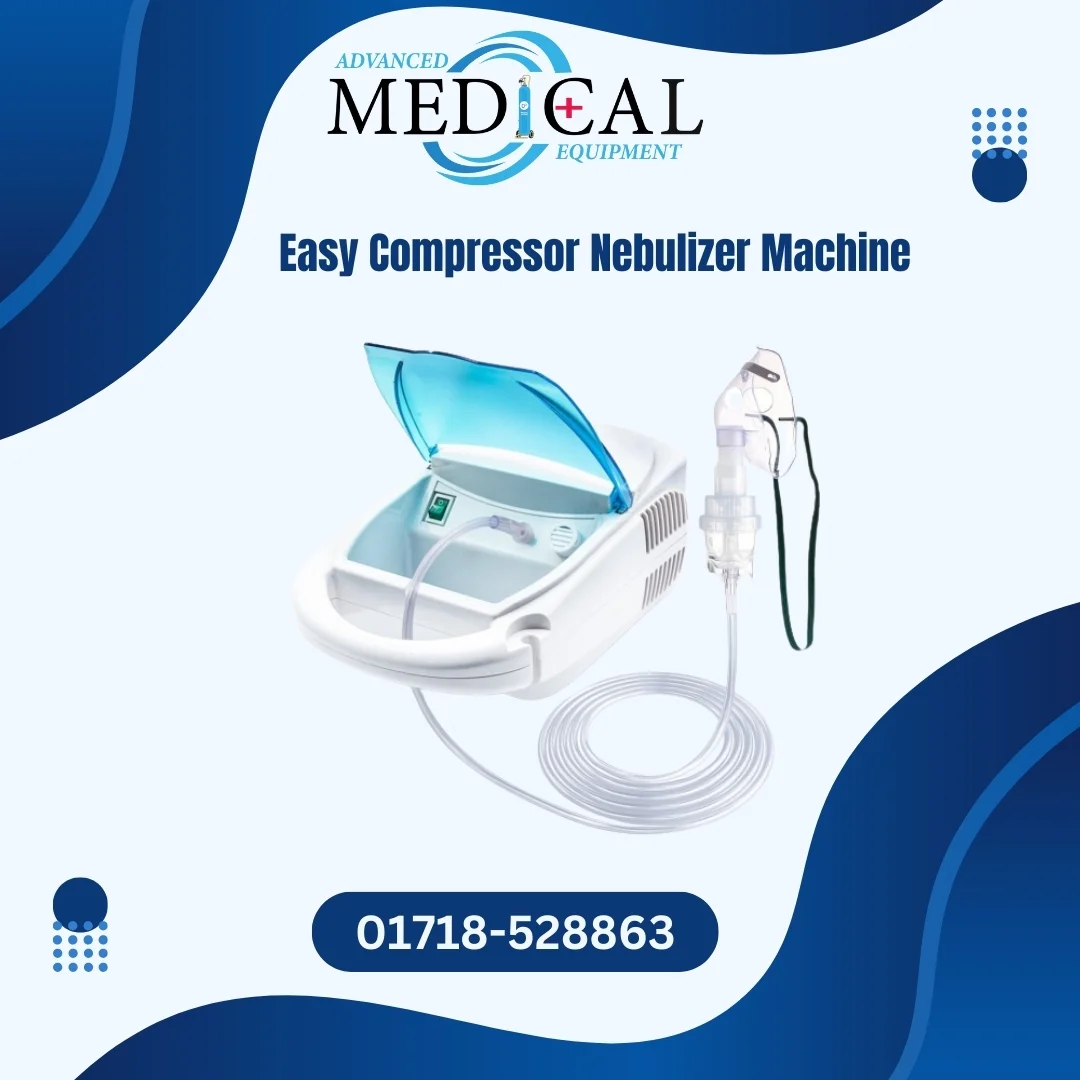
The Easy Compressor Nebulizer is built in a compact, rounded housing with a built-in carry handle. A hinged transparent blue lid opens to reveal a storage well where the air tube, nebulizer cup and accessories can be kept together, so that nothing gets lost between treatments. A simple rocker power switch sits inside the well, and ventilation slots on the side of the housing let the compressor release heat during operation. The supplied set shows a clear air tube, a nebulizer cup and an adult-style face mask with an elastic strap.
- Compact, lightweight body with a built-in handle for easy carrying between rooms or visits
- Hinged lid with an internal storage compartment for the tube, cup and mask
- One-switch operation, which keeps training time short for family members and new staff
- Ventilated housing designed to help the compressor stay cool during use
- Clear PVC-style tubing and a face mask that let you see the mist and check that medicine is flowing
- Suitable for repeated daily use at home, in a small clinic or in an ambulance or emergency kit
Key Benefits for Patients and Caregivers
The biggest benefit of a home nebulizer is convenience. Instead of travelling to a hospital every time a child develops a wheeze or an elderly parent has a flare-up of chronic lung disease, a caregiver who has been trained by the treating doctor can give a prescribed treatment at home. That saves time, reduces stress and can make nights much easier for a family dealing with a long-term breathing condition.
A second benefit is that nebulization does not depend on a patient's ability to follow breathing instructions. A toddler who cannot hold their breath, a person who is very short of breath or an older adult with weak hands can still receive medicine by breathing quietly through a mask. A third benefit is flexibility: many commonly prescribed respiratory solutions come in nebule or vial form, and a compressor nebulizer can be used with a wide range of such liquids, always under medical direction.
For clinics and pharmacies, one reliable nebulizer on the counter means quicker response to patients who arrive with breathing difficulty, and the same unit can serve many patients as long as masks, cups and tubing are replaced or cleaned according to hygiene rules.
Who Should Consider This Nebulizer?
Doctors may recommend nebulizer therapy for a number of conditions affecting the airways, including asthma, bronchiolitis in infants, chronic obstructive pulmonary disease, bronchiectasis, croup and other infections or allergic conditions that cause wheezing and congestion. Only a registered doctor can decide whether nebulization is appropriate, which medicine to use, the dose and how often to give it. Never start or change a prescription on your own, and never use a nebulizer for a medicine that has not been approved for nebulized use.
- Parents of children with recurrent wheeze or asthma who have been advised to keep a nebulizer at home
- Families caring for elderly patients with chronic lung disease
- Patients who are recovering from a chest infection and have been prescribed nebulized treatment
- Small clinics, chambers, diagnostic centres and pharmacies that provide emergency respiratory care
- Community health programmes, NGOs and school or workplace health rooms
- Ambulance services and home-care providers who need a portable respiratory therapy device
How to Use the Easy Compressor Nebulizer Safely
Always follow your doctor's prescription and the user manual that comes with the unit. The general process is straightforward. First, wash your hands and place the compressor on a flat, stable surface where the air inlet is not blocked. Second, open the medication cup, pour in the prescribed liquid using the exact volume your doctor has advised, and close the cup securely. Third, connect one end of the air tube to the compressor outlet and the other end to the cup, then attach the mask or mouthpiece. Fourth, switch the unit on, hold the cup upright, and breathe normally until the mist stops or the treatment time recommended by your doctor is complete. Finally, switch the unit off, wipe the mask or mouthpiece and clean the cup.
Cleaning, Care and Maintenance
Hygiene is critical with any respiratory device. Damp, dirty parts can allow bacteria to grow, which is the last thing a person with a chest problem needs. After each treatment, disconnect the cup and mask, rinse them in clean warm water, shake off the excess and let them air-dry on a clean tissue. Many users also wash the parts with mild dish soap once a day, rinse well and dry completely. Do not wash the air tube with water unless the manual says it is safe, and never immerse the compressor housing in water. Replace the air filter, mask, cup and tubing at the intervals recommended in the manual, or sooner if they look dirty, cracked or discoloured. Store the unit in its lid compartment in a dry place away from direct sunlight and children.
Safety Notes and Good Practice
Use the nebulizer only with the voltage specified for the machine, which for Bangladesh is normally a 230 V, 50 Hz supply. Keep the compressor on a hard surface rather than on a bed or sofa, so the vents stay clear. Do not leave children unattended during treatment. If a patient becomes more breathless, develops a fast heartbeat, turns pale or blue, or does not improve after a prescribed treatment, seek emergency medical help immediately. Nebulizers support treatment but do not replace professional medical care.
Technical Overview
The specification table on this page lists the typical parameters for compressor nebulizers sold in Bangladesh. Exact figures such as compressor pressure, flow rate and weight can differ slightly between production batches, so please confirm them against the label on the unit you receive.
Choosing a Nebulizer in the Bangladesh Market
When comparing nebulizers online or in medical markets such as Bangabandhu Avenue, Mitford or Farmgate in Dhaka, check five things. The first is whether the unit is a compressor type; compressor machines are the most widely used and are compatible with a broad range of liquid medicines. The second is noise level, which matters when treating a sleepy child. The third is the supplied accessory set, since both adult and child masks are very useful in a family. The fourth is spare-part availability, because filters, cups and tubing are consumables. The fifth is after-sales support from the seller. Compressor nebulizers in Bangladesh are commonly offered between about BDT 1,500 and BDT 4,000, with branded European models costing more. The Easy Compressor Nebulizer sits in the middle of that range and offers a good balance of everyday reliability and affordability.
Why Buy from Advanced Medical Equipment?
Advanced Medical Equipment focuses on practical hospital, clinic and home-care products for the Bangladesh market. Our team can help you understand which product suits your situation, confirm what is included in the package and arrange delivery inside Dhaka and to other districts. For orders and enquiries, call 01718-528863.
Frequently Asked Questions
Can I use this nebulizer for both adults and children? Nebulizers are commonly used for both groups, but the mask size and the medicine dose must be chosen by your doctor. Ask whether a child-size mask is included or available separately.
Which medicines can I put in the cup? Only medicines that your doctor or pharmacist confirms are suitable for nebulization. Do not add herbal liquids, oils or home remedies.
How often should I replace the filter and mask? Follow the manual. As a general rule, replace the filter when it turns grey or after the number of hours stated, and replace the mask and cup if they are cracked, cloudy or hard to clean.
Is it noisy? Compressor nebulizers produce a steady humming sound. Typical noise levels for this class are around 60 dB or lower, which is similar to normal conversation.
Can I carry it when travelling? Yes. The built-in handle and compact size make it easy to carry, but you need a mains power source when using it.