
Description
Stainless Steel Electric Instrument Sterilizer with Lid and Perforated Tray
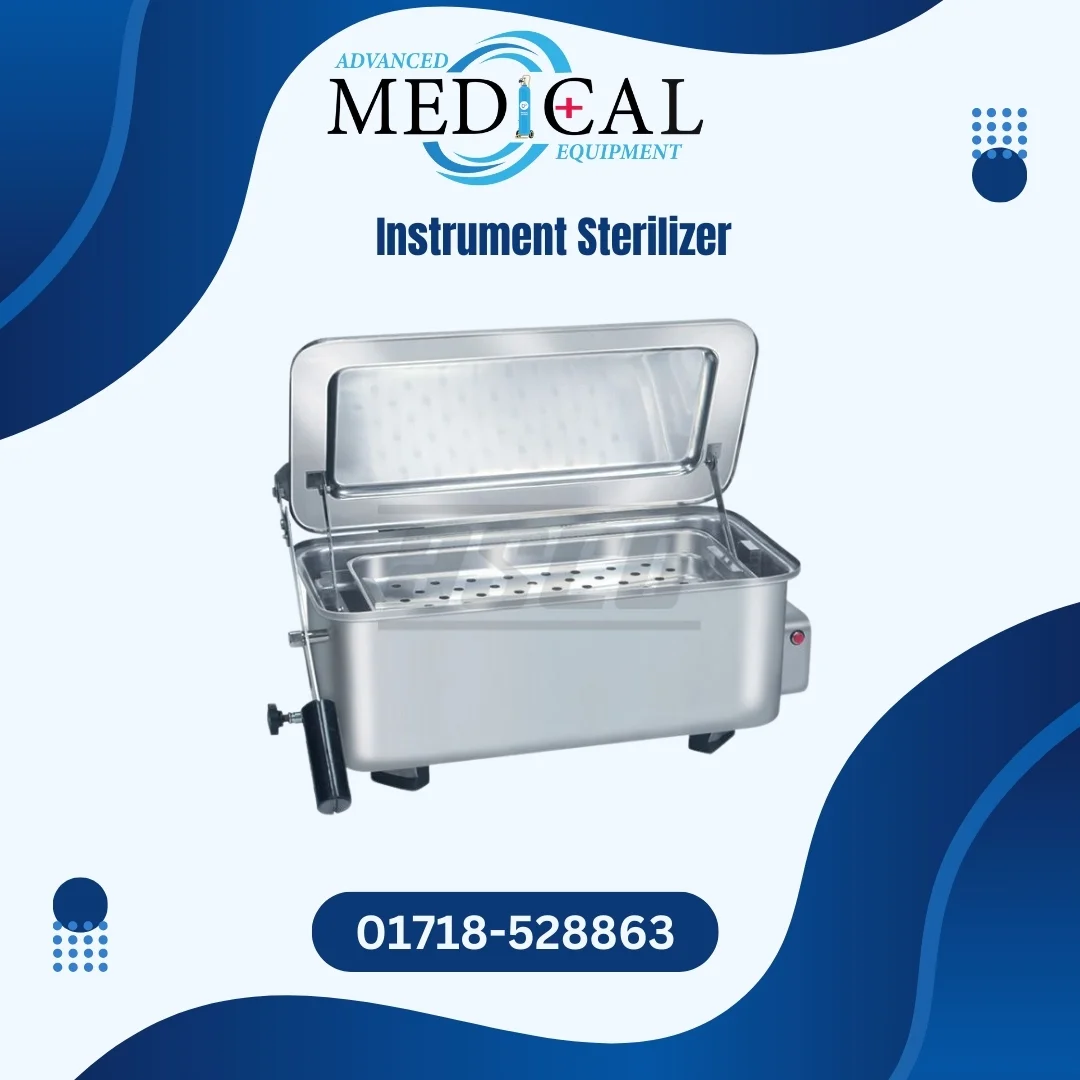
Clean instruments are the foundation of safe clinical practice. The Instrument Sterilizer from Advanced Medical Equipment is a stainless steel, electrically heated sterilizer box with a hinged lid, a clear viewing window in the lid, a lift-out perforated tray and a power indicator light. It is designed to boil and disinfect small surgical, dental, dressing and examination instruments in clinics, doctor chambers, dental practices, nursing stations and small operating rooms where a full autoclave may not be available or practical. It is simple, durable and quick to use, and it can be a valuable addition to a small facility that needs reliable instrument disinfection every day.
How an Electric Instrument Sterilizer Works
This type of sterilizer is a boiling sterilizer. The stainless steel chamber is filled with a measured amount of water, the instruments are placed on the perforated tray, the lid is closed, and an electric heating element brings the water to a boil. Boiling for the required time disinfects instruments by heat. Typical operating guidance for this type of unit calls for roughly one to one and a half litres of water, heavy instruments at the bottom of the tray, smaller instruments on top, and hinged instruments such as forceps and scissors left open so that the water reaches every surface. Do not overload the tray.
Boiling is a form of high-level disinfection. It is not the same as steam sterilization in a pressure autoclave. For critical items that enter sterile tissue and require full sterility, follow your national infection-control guideline and use an autoclave where it is required. A boiling sterilizer remains useful for many non-critical and semi-critical instruments and as a backup when an autoclave is unavailable.
Features at a Glance
- Stainless steel construction: Corrosion-resistant body and tray that withstand repeated heating and cleaning.
- Hinged lid with viewing window: A glass or transparent panel in the lid lets you watch the water and instruments without lifting the lid.
- Perforated instrument tray: The lift-out tray keeps instruments off the base of the chamber, lets water circulate, and makes unloading easier.
- Lid support and lock lever: A side lever and support rod hold the lid open while you load and secure it when closed.
- Electric heating: Plug it into the mains and it heats without the need for gas or a separate burner.
- Power indicator lamp: A red light shows when the unit is switched on.
- Rubber feet: Non-slip feet keep the unit steady on the bench and protect the surface.
- Compact rectangular body: It fits on a laboratory bench, trolley or counter with easy access to a power outlet.
Where It Is Used
Doctor chambers and general practice. Disinfect minor surgery tools, dressing scissors, forceps, speculums and examination instruments between patients.
Dental clinics. Many dental practices use a boiling sterilizer for hand instruments such as mirrors, probes and extraction forceps, in line with local guidelines.
Nursing stations and wards. Keep a small unit at a ward station for dressing trays and basic instruments.
Diagnostic centres and laboratories. Disinfect glass slides, metal spatulas, probes and other reusable items.
Veterinary and rural health centres. A simple electric sterilizer is practical where infrastructure is limited.
Beauty and care settings. Salons and skin-care clinics follow their own local rules, so check your regulatory requirements before using a boiling sterilizer for any skin-contact tools.
Benefits for Your Practice
Low operating cost. The unit uses only electricity and clean water, with no consumable cartridges.
Easy to learn. Staff can be trained in a few minutes; the process is simple to follow and easy to supervise.
Durable steel body. Stainless steel resists rust and can be wiped down after use.
Quick turnaround. A small volume of water heats faster than a large container, so instruments are ready in less time.
Backup option. Larger facilities keep one as a reserve when the autoclave is busy or out of service.
Step-by-Step Instructions
- Pre-clean instruments by washing them to remove blood, tissue and debris. Disinfection is far less effective on dirty instruments.
- Place the sterilizer on a flat, stable surface close to a properly earthed power outlet.
- Pour in clean water to the level recommended in the manufacturer's manual. Never switch on the unit without water.
- Arrange instruments on the perforated tray with heavier ones at the bottom, hinged instruments open, and nothing overlapping.
- Lower the tray into the chamber and close the lid.
- Switch on the power. When the water boils, begin timing according to your protocol and the instrument type.
- When the time is complete, switch off and unplug the unit. Lift the lid carefully, as steam and hot surfaces can burn.
- Use sterile forceps to remove instruments and dry them on a clean sterile towel, or store them in a clean covered container for immediate use.
- Empty the water after use and wipe the interior dry.
Care and Maintenance
Hard water leaves limescale on the heating element and the chamber walls. Use distilled or softened water where possible, and descale the chamber regularly with a suitable descaling solution. Wipe the exterior with a damp cloth and a mild detergent, and avoid abrasive pads that can scratch the steel and encourage corrosion. Check the power cable and plug before each use. Do not immerse the control or element housing in water. Keep the lid hinge and lock lever clean and lightly free of residue, and replace worn rubber feet. Store the sterilizer dry with the lid slightly open to prevent odours.
Safety Reminders
- Always unplug the unit before filling, emptying or cleaning.
- Never operate with an empty chamber because the element can overheat and be damaged.
- Keep the unit away from children and anything flammable.
- Use heat-resistant gloves or forceps to handle the tray after use.
- Do not boil plastic, rubber or instruments that the manufacturer says are not heat-safe.
- Follow the infection prevention guideline of your hospital or the Directorate General of Health Services, and keep a record of cycles if your facility requires it.
Choosing the Right Size
Electric instrument sterilizers are made in several sizes, commonly measured in inches. Choose a size that holds your longest instrument with the lid closed, with room for the tray. A small chamber is enough for dental tools and minor surgical sets, while a longer chamber suits dressing scissors and larger forceps. Tell us what instruments you need to process and we will recommend the right size. Please confirm the exact dimensions, wattage and material grade of the unit you will receive before ordering.
Frequently Asked Questions
Is this an autoclave? No. It is a boiling-type electric instrument sterilizer. If your protocol requires steam sterilization, you will need an autoclave.
How much water does it need? Guidance for this type of unit is roughly one to one and a half litres, but follow your unit's manual.
Can it be used in a dental clinic? Many dental clinics use similar units for hand instruments. Check your regulator's requirements.
What voltage does it use? Electric sterilizers are normally supplied for the local mains. Confirm the rating when ordering.
Do you offer delivery across Bangladesh? Yes, we deliver nationwide.
Order from Advanced Medical Equipment
Advanced Medical Equipment supplies sterilizers, surgical hollowware, trays, kidney dishes and clinic equipment for practices of all sizes. To check stock, ask about sizes or arrange delivery, call 01718-528863. Equip your clinic with a reliable instrument sterilizer and protect your patients and staff.